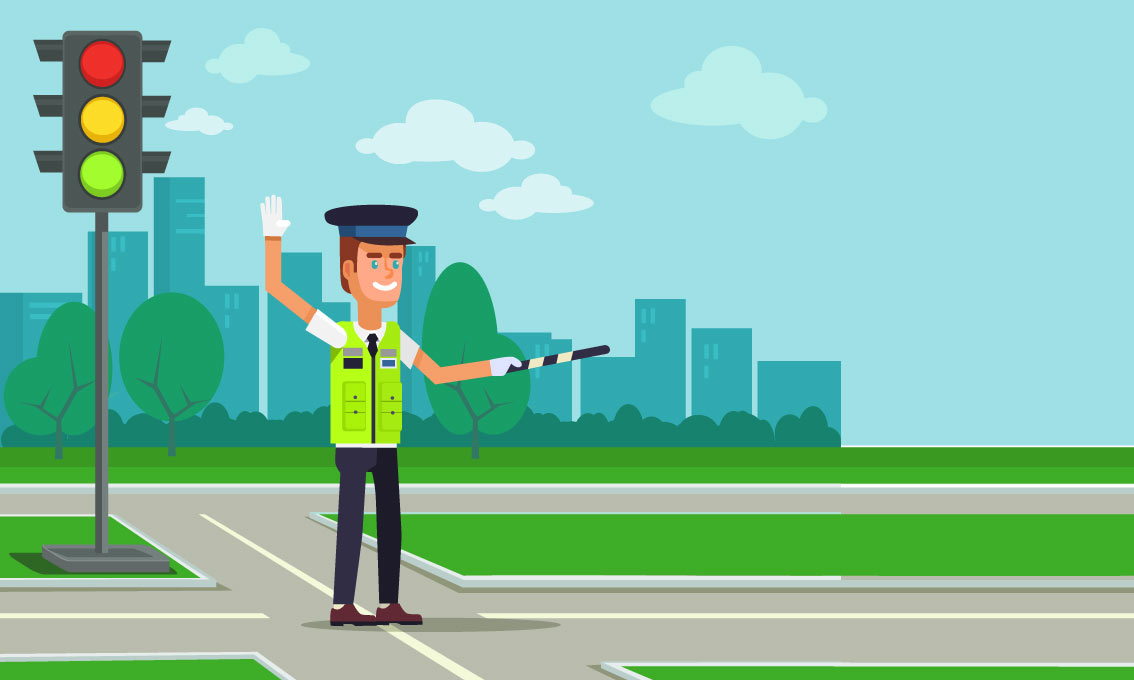
A traffic marshal is a uniformed official, often a police officer, whose job it is to direct traffic and enforce traffic laws, often at public events.
Traffic marshals are generally armed with whistles, which they use to order people to move aside to allow vehicles to pass.
Traffic marshals are often involved in situations when the flow of traffic must be shut down, such as in the case of a road accident or emergency.
Skills of a traffic marshal:
1.Communication:
In your role as a traffic controller, clear and precise communication is paramount. This skill will allow you to quickly relay instructions to drivers, construction crews and other colleagues.
2.Attention to detail:
Paying meticulous attention to detail is an integral part of the job. With hundreds of vehicles and pedestrians to monitor and coordinate, ensuring nothing slips past you can make a big difference in maintaining traffic flow and safety.
3.Decision making:
There can be times when you will need to make quick decisions in stressful situations. The ability to stay calm, think quickly on your feet and make effective decisions is a critical skill in this role. Related: How to Make an Informed Decision (Plus Benefits and Skills)
4.Physical stamina and alertness:
Given the nature of the job, being physically active and vigilant is a prerequisite. Traffic controllers need to be able to stay on their feet for long hours and remain alert and focused throughout their shifts.
How Long Does It Takes to Become A Traffic Marshal?
It typically takes 2-4 years to become a traffic controller:
What Types of Signs do Road Traffic Marshal use?
Signs are crucial for relayed information to drivers and pedestrians alike and there’s a large range of things they can express, from speed and road conditions to hazards and regulations.
1. Warning Signs
Road traffic management requires the use of warning signs, which are typically diamond-shaped with yellow background and black symbol and border. Such signs are used to advise drivers about road conditions, particularly those that require speed reduction or further action otherwise.
2. Hazard Markers
Effective traffic management also demands good use of hazard markers, which chiefly express information about traffic direction, obstructions, and road width. Rectangular with black and white stripe or chevron design, hazard markers fall under the following categories:
3. Regulatory Signs
Regulatory signs are used to ensure drivers abide by the road law, even when usual traffic flow is disrupted. Speed limit signs are the biggest example, but there are many these signs. You can usually identify them by their rectangular design with black and white background, and often some red colouring.
How do Road Traffic Controllers Marshal Access?
As well as proper signage, effective road traffic management relies on safely controlling the movement of vehicles. The main equipment to do so involves traffic cones, barricades, and barrels:
1. Cones
The classic image of traffic control, cones are chiefly used to redirect traffic. Although available in a huge range of colours, sizes, heights, and weights, they share the same practical and durable design.
The cone base provides fantastic traction whilst the hollow body allows convenient stacking and transport. Traffic cones are built to be extremely durable so that they can withstand the elements, traditionally comprised of UV-resistant thermoplastic PVC and hard rubber.
2. Barricades
Much like traffic cones, barricades are manufactured in all sorts of sizes and styles, though the specific materials used are a little more varied. This traffic control equipment acts as a boundary for both vehicles and pedestrians, where access can be restricted or blocked entirely.
3. Barrels
Barrels, or channelizer drums, serve much the same function as traffic cones though there are a few key distinctions. Firstly, they’re much larger in size. However, they’re also made from tougher plastics. This is because they’re designed to withstand the toughest of conditions, which makes them ideal for traffic control on high-speed roadways.
We specialize in efficient traffic management, preventing congestion and ensuring a safe flow of vehicles in various settings.
Traffic management is crucial for maintaining safety on the road, at constrution sites, or during special events. RAS security services provides professional traffic marshalling services to ensure the smooth flow of vehicles. Our trained personnel use proven techniques to prevent congestion, reduce accidents, and enhance the overall safety of the area.
Conclusion:
The importance of maintaining safety when on the road should never be overlooked. Traffic Marshal is one of the person to keep all road users safe as their main aim is to provide drivers and pedestrians with important information and warning regarding the streets.
If you want to learn more about traffic control equipment, refer to our guide otherwise visit our website RAS Security Services and read about the different types of traffic control equipment used on public streets and highways.


