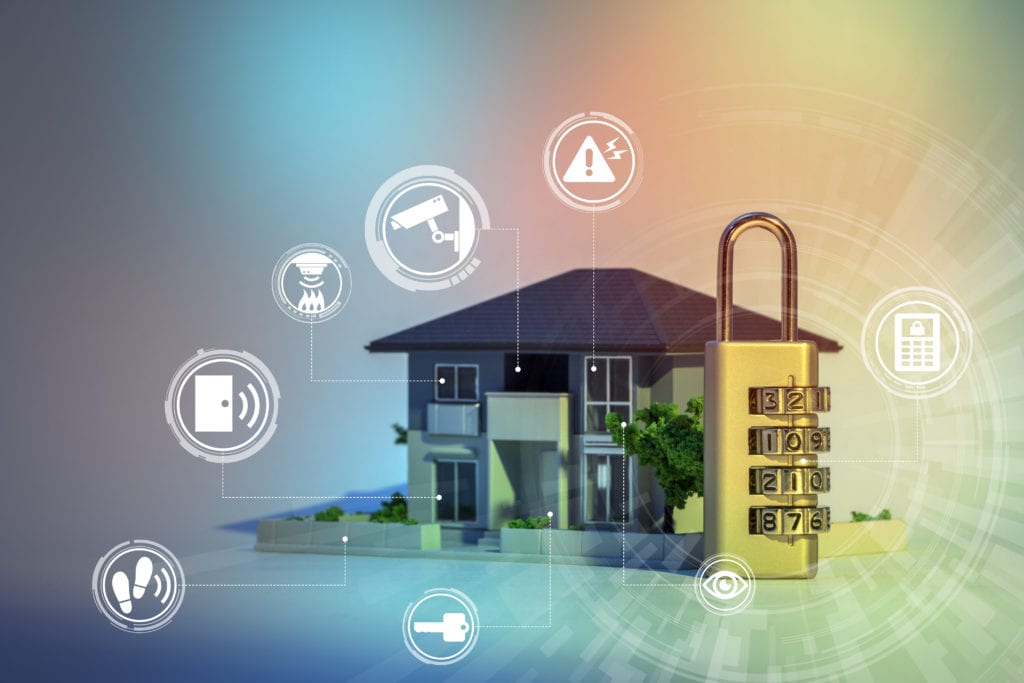
Every building needs a way to keep unwanted guests outside. Organizations need to restrict access to certain areas within their premises, even to people who have already been invited inside. Because of this, you need to adopt a set of security measures with which you can grant access to protected amenities for authorized personnel only. This could be for keeping the public out of your HQ, on-site third parties from areas where sensitive work goes on, or from mission-critical areas such as the server room.
Premises security refers to protecting people, property, and physical assets from events that could cause damage or loss. It is an optimal way to keep companies of all sizes secure and protected.
Premises security technologies are designed to protect your equipment, resources, and any other assets within your office space. Some examples are access control, surveillance, and alarm systems. They work in tandem to make up your physical security strategy.
The best, most viable physical security strategies use both technology and specialized hardware to achieve their safety goals. These safety goals include the protection of your assets from intruders, internal threats, accidents, and even responding to these threats.
CCTV stands for closed-circuit television and is commonly known as video surveillance. “Closed-circuit” means broadcasts are usually transmitted to a limited (closed) number of monitors, unlike “regular” TV, which is broadcast to the public at large. CCTV networks are commonly used to detect and deter criminal activities, and record traffic infractions, but they have other uses.
Crime management:
CCTV surveillance can deter potential criminals. When a crime does occur, video footage can help law enforcement to investigate and later provide evidence for prosecution in a law court. Used in conjunction with CCTV, audio, thermal and other types of sensors can alert officials to occurrences that are out of the ordinary, e.g. a fire or gun shots at a location. For businesses, CCTV cameras can detect and monitor in-house criminal activities. Prisons may use video surveillance to prevent drones from delivering drugs and other contraband to prisoners. Security cameras can monitor areas that are not easily accessible, e.g. rooftops.
Disaster management:
Using CCTV cameras, emergency services and rescue workers can assess and monitor events in real time to relay a “situation” via video to disaster management teams, e.g. from inside a burning building, from a cave or from a helicopter flying over a scene.
City and community street monitoring:
Cameras at traffic lights and elsewhere in cities monitor people to gather traffic statistics as well as evidentiary footage for speeding. An heir to the IoT, the AoT is a Chicago initiative to collect real-time data, primarily weather and environment, about the city. Some sensory nodes include security cameras that analyse the images they record but, to protect individuals’ privacy, do not transmit or store these images.
Access control systems:
Access control systems are security solutions used to manage and regulate entry to physical or virtual spaces. These systems ensure that only authorized individuals or entities can gain access to specific areas, resources, or information. Access control systems can vary widely in complexity and features, but they typically include the following components:
Intercoms:
An intercom system is an electronic device that enables two-way communication between people. Intercom systems also allow people in a building to grant property access to visitors by opening a door or gate remotely. Intercom systems have taken many forms throughout history.
1.Wired Intercoms
Wired intercom systems, as the name suggests, rely on physical connections, typically through electrical wiring. These systems have a long history and are known for their reliability and durability.
Home and Business Applications
Wired intercoms find applications in both homes and businesses. In residences, they facilitate room-to-room communication and provide a reliable means of monitoring visitors at the front door. In business environments, wired intercoms are often used for internal communication within office complexes and industrial facilities.
Advantages and Limitations
Wired intercoms offer clear and uninterrupted communication, making them suitable for critical situations. They are less susceptible to interference from external factors like wireless devices. However, their installation can be complex and may require professional assistance. Additionally, they lack the mobility of wireless counterparts.
2.Wireless Intercoms:
Wireless intercom systems operate without the need for physical connections. They rely on radio frequencies or Wi-Fi signals for communication, offering flexibility and ease of installation.
Use Cases in Homes and Businesses
Wireless intercoms are versatile and find applications in homes, businesses, and outdoor settings. They are commonly used for gate or door communication, allowing residents or employees to grant access remotely.
Benefits and Potential Drawbacks
Wireless intercoms are known for their easy installation and flexibility. They can be integrated with existing Wi-Fi networks, reducing the need for extensive wiring. However, their range may be limited by signal strength and can be susceptible to interference.
3.Video Intercom Systems
Video intercom systems take communication to the next level by adding visual components. They include cameras and displays, allowing users to see and interact with visitors or colleagues.
Residential and Commercial Use
Video intercoms are commonly used in both residential and commercial settings. In homes, they provide an added layer of security by enabling visual verification of visitors. In businesses, they facilitate secure access control and enhance communication.
Features and Advantages
Video intercoms offer the advantage of visual identification, making it easier to verify the identity of visitors or employees.
They often come with features like night vision for 24/7 functionality. Additionally, some systems allow for remote access, enabling users to interact with visitors from anywhere.
4.IP-Based Intercoms:
IP-based intercom systems leverage the internet protocol for communication. They are highly flexible and can be integrated with existing IP networks, making them ideal for modern homes and businesses.
Integration in Modern Homes and Businesses
IP-based intercoms seamlessly integrate with modern technologies, allowing users to access communication features through smartphones, tablets, or computers.
They are particularly valuable in smart homes and businesses seeking advanced communication solutions.
Scalability and Flexibility
One of the significant advantages of IP-based intercoms is their scalability. Users can easily add or remove devices as needed, making them suitable for businesses with evolving communication requirements.
5.Mobile App Intercoms Explained
Mobile app-based intercoms leverage the ubiquity of smartphones for communication. They allow users to transform their mobile devices into intercom units, providing convenience and accessibility. Mobile app-based intercoms are incredibly convenient for both home and business users. Homeowners can communicate with visitors from anywhere within their property, while businesses can enable employees to use their smartphones for internal communication.
Security surveillance products encompass a wide range of tools and technologies designed to monitor, record, and protect both physical and digital spaces. Here are some common types of security surveillance products:
FAQ’s:
1.Is it expensive to install CCTV?
The price of installing a CCTV camera system can vary based on complexity and site-specific factors. Typically, the expenses include wiring, labour, and potential accessories. While Huntaway Security offers free site surveys to estimate CCTV installation costs, it’s essential to budget for wiring and installation expenses, which can vary.
2.Can I upgrade my existing CCTV camera system, and how does it impact the pricing?
Yes, you can upgrade your existing CCTV camera system and it can be cost-effective. The impact on pricing depends on the extent of the upgrade. Replacing specific components like cameras or recorders may be more economical than overhauling the entire system, making it a flexible and budget-conscious option.
3.What features increase the price of a CCTV camera system?
Features such as advanced resolution, night vision, weatherproofing, and pan-tilt-zoom capabilities can increase the price of a CCTV camera system. High-quality recording and storage options may also impact pricing. Therefore, it is essential to select features that suit your needs for a cost-effective CCTV camera system.
4.What is the major purpose of a video management system?
A video management system's main purpose is to gather, study, and store surveillance footage. This helps the user adjust their security measures to improve property safety.
5.What is the difference between Network Video Recorders and Video Management Systems?
A network video recorder (NVR) typically does not require special software to access cameras and recordings. You typically only need a web browser-based program to do so. However, they can only accommodate a small number of cameras.
Meanwhile, a video management system (VMS) requires software to monitor a far larger network of cameras. You can also receive live alerts and have the option to integrate it with your existing security systems.
The overall cost of setting up a CCTV system in Singapore can vary based on several factors. These include the number and type of cameras, the complexity of the installation, the need for additional accessories, the duration of video storage required, and the specific features of the cameras. Site-specific considerations and customisation may also influence the final price of the CCTV system.
RAS Security offers a range of CCTV system packages, and the cost can vary based on the specific package and the number of cameras. Our packages offer flexibility as you can choose between dome or bullet-type cameras. It's important to note that the cost can vary based on the specific features and specifications of the cameras. Additionally, it's advisable to consider additional expenses like installation and accessories when planning your CCTV system purchase in Singapore to ensure a comprehensive surveillance solution.
RAS Security integrates high-tech equipment into its security solutions, enhancing the effectiveness of our services. Leveraging the latest technology, we provide comprehensive security solutions for diverse environments. Trust us for innovative and advanced security measures that align with your specific requirements, reinforcing our commitment to delivering cutting-edge protection.
Conclusion:
Installing a security system is among the most important expenditures you can make for your safety. By doing this, you will protect your loved ones and belongings from dangers while you are away, such as fires and break-ins. RAS Security can provide you with affordable, effective, and trustworthy security services to protect your interests. RAS security services would be thrilled to come down to your site and survey it, to advise you on the best security measures you can take to ensure that you are fully protected in the situation of any threats, both physical as well as virtual (cyber-attacks).
Please feel free to visit our website or give us a call to know more about security products.


